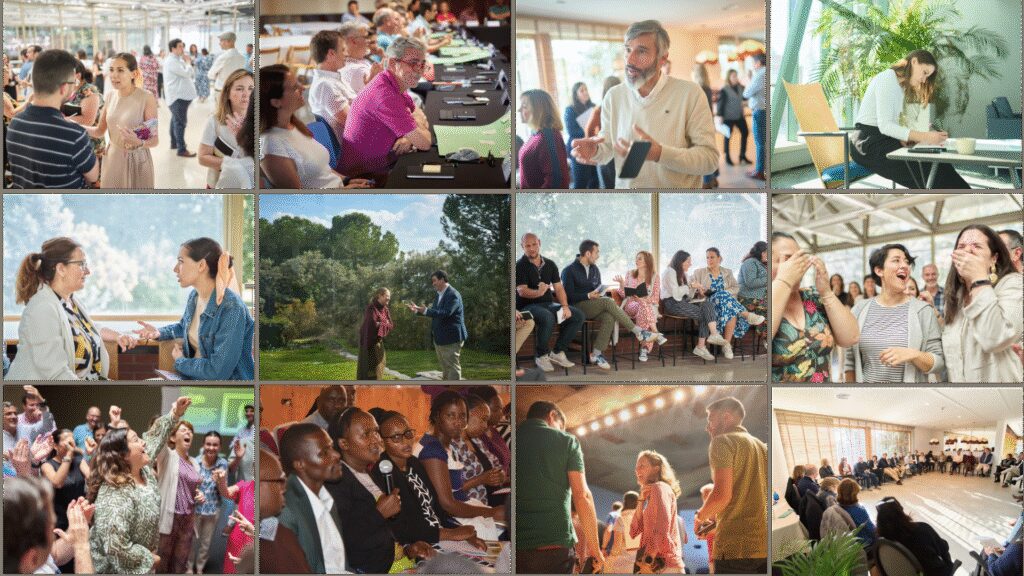
Workshops
Australia
January 25-05, 2027

Cultura escolar y educación del carácter | Sydney 2027

Workshops and support to strengthen character education in everyday school life across four Sydney schools.

Event Information

Event Type: Workshops
Duration: Two weeks: 25 January–5 February 2027.
Place: Sydney, Australia: Redfield College, Tangara School for Girls, Montgrove College and Wollemi College.
Price: Private event.
Host:

PARED and Become.

Supporting the next phase

Following their leadership teams’ participation in the PRIMED Institute, the PARED schools will continue their journey through a programme tailored to their needs, facilitated by Juan P. Dabdoub.

The visit will combine workshops on Framing Thoughts and PRIMED, class-meetings training and planning sessions with school leadership teams. One school will also begin an exploration of its culture, providing a practical learning opportunity for colleagues who can continue the process.

Facilitator

The facilitator of the PRIMED Institute is Juan P. Dabdoub, Director of Become, University Professor, member of the Education, Citizenship and Character Group at University of Navarra, Scholar Affiliate of the Center for Character and Citizenship at the University of Missouri-St. Louis, and Secretary of the Association for Moral Education.

Conectar las ideas marco y los principios PRIMED con las relaciones, decisiones y prácticas cotidianas del colegio.

Practicar asambleas de aula que den voz al alumnado y favorezcan el diálogo y la responsabilidad compartida.

Reconocer fortalezas y posibilidades de mejora en la cultura escolar, y definir prioridades que los equipos puedan sostener.

Audience

Equipos directivos, docentes, mentores y personal de los cuatro colegios PARED. Estudiantes y familias participarán en actividades específicas de exploración de la cultura escolar.

Programa interno de la red PARED.

What is the PRIMED model

The PRIMED model is an acronym for six design principles for school improvement that integrate 42 character education effective practices for schools identified in studies, reviews, and meta-analyses from the last quarter of a century. Effective means that these practices are backed by scientific studies, including statistical evidence of their impact on student's development. Rather than specific practices or strategies, these principles are six reminders of what should be considered when designing each practice and strategy to effectively promote character development. Here is a brief description of each one.

Prioritization
Visible and concrete prioritization of character development in all areas. Leaders should direct their efforts and resources in this direction holistically.
Relationships
Promoting caring relationships throughout the community for the sake of people and their learning, following the adage: "Kids don't care how much you know, until they know how much you care".
Intrinsic Motivation
Developing intrinsic motivation to do well, as opposed to external motivations such as rewards and punishments. It's not just about doing good, but also doing it for the right reasons.
Modeling
Everyone in the school, especially adults, should strive to be models of virtue, from which everyone can learn. Following Gandhi, it is about "being the change we want to see in the world".
Empowerment
Empower everyone in the community, hearing their voices and granting the autonomy that each one deserves to contribute to the common good by assuming leadership roles and responsibilities.
Desarrollo
And finally, a developmental pedagogy that integrates long-term character-related goals such as social-emotional competencies or moral reasoning into the curriculum.

For more information:

en_USEnglish